
Goodbye Houdini

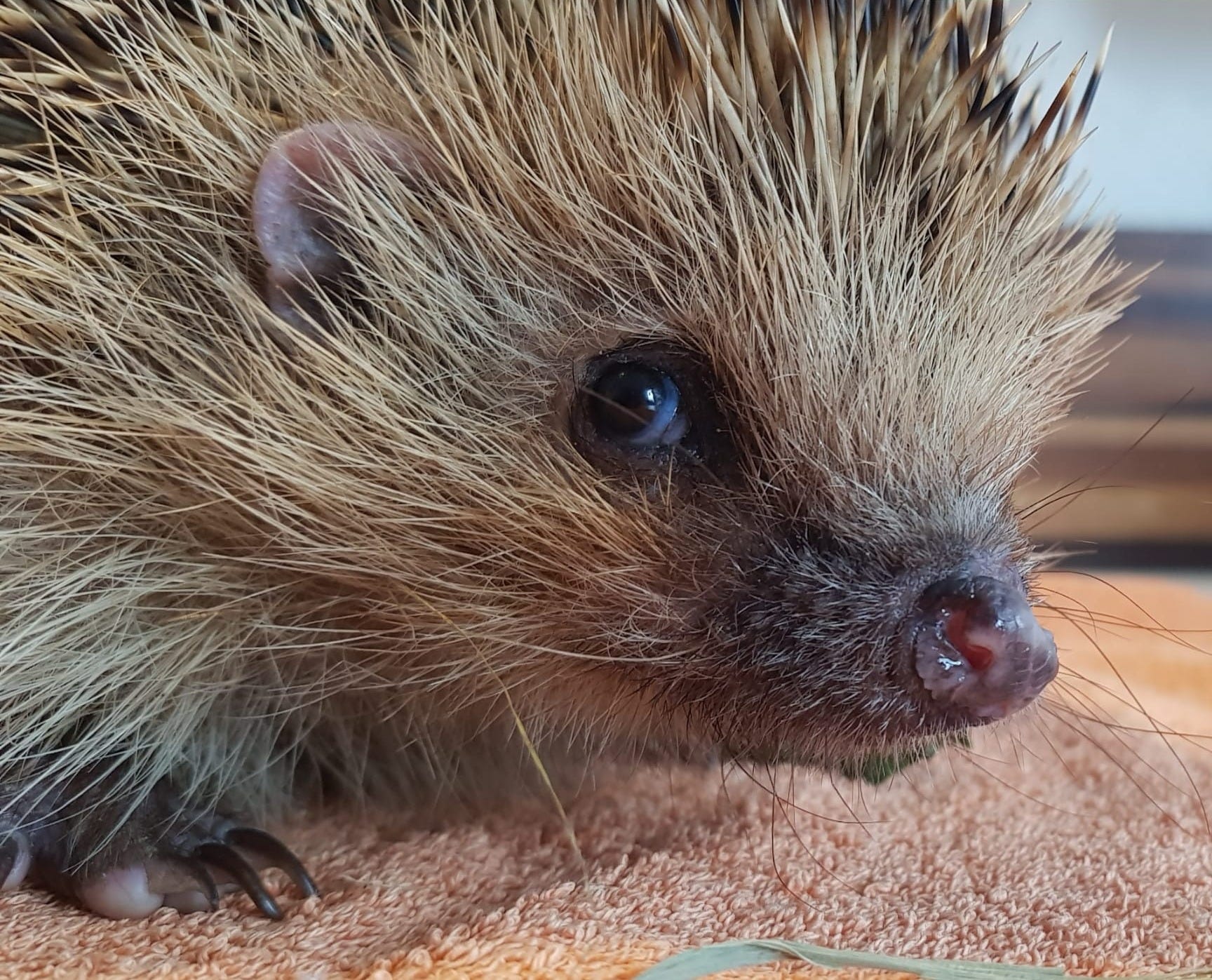
I thought it would take ages to move house. The estate agents warned me the market was slow, that interest rates were high, that I might be stuck waiting for a buyer for months. This suited me. I wanted one last summer in the garden, I wanted to train the roses a step closer to the back door, try out my new hedgehog nest box, see if I could finally persuade swifts to use my swift bricks. I made a new gravel garden in the front – partly, yes, to attract buyers (and put them off paving it over), – but also I wanted to curate it for a summer, see how I liked it in what was still my space. But the agents sold it the day the listing went live – I never even had a For Sale sign – and suddenly I’m being pushed into moving in three weeks, which is too soon because I’m not ready, but also because of course a female hedgehog is using the new nest box, there are robins sitting on eggs and I don’t know where Houdini is.
Houdini is my three-legged prince, the bane of my life, my zero-shits-given gangster hedgehog. I first spotted him on the cameras three years ago, hobbling around on a bit of bone he was using as a peg-leg. I tried to catch him to take to the rescue centre but he escaped three times (hence his name). And when the vet eventually saw him she said she’d never known a hedgehog survive such an injury – he had lost his leg below the knee and somehow the flesh had healed around the bone.
He gets into a lot of scrapes. His missing back leg means he can’t wash himself too well, so he’s prone to skin complaints and ear wax build up on his left side. He’s old, so is often found staring into space or out during the day, and was once spotted asleep under a car. He has a mind of his own and refuses to use the hedgehog boxes the neighbours and I provide for him, and instead likes to sleep in my feeding station, which of course I pimp with straw to make him comfortable. Towards the end of last year he suffered a burst cyst in his neck, which nearly killed him, and so he spent some more time in hedgehog hospital, and then two months in my garden where he mostly ate kitten biscuits and slept (he should have been hibernating). My lovely neighbour Kate fed him daily for the entire time I was in Costa Rica, but he disappeared two days before I came home. Looking on the cameras, his disappearance coincided with the arrival of another male hog, who had presumably woken from hibernation, entered the feeding station looking for biscuits, and started a fight.
At this stage, you may be thinking I should just let him slope off and die. And if he did that I would be okay with it. I would – he’s a wild animal, it’s completely natural for him to get into scrapes and (finally) not be able to survive them. But the genius of Houdini is that when he gets into scrapes he goes and sits in the road until he’s rescued, so he’s always looked after. There’s a fine line between letting a wild animal be wild and letting a wild animal suffer, and when he’s suffering he always asks for help. It’s only right that he should get it.
I suspect he’s in a neighbouring garden, having finally accepted that he’s not as hard as he used to be and that he’s better off letting other males win territorial disputes. But I can’t help worrying. Not that I would have taken him with me, just that I want to make sure he’s ok before I go. But I’ll probably never know.
This presents the wider problem of whether the garden will remain a sanctuary for him and his/my wild kin. My buyer has said she’ll keep the pond (or so the agents have told me), and that she’s happy to share space with wildlife, and of course I’ll be leaving her a couple of books to read. But, really, what happens when a wildlife gardener leaves their garden? Death by a thousand cuts, I reckon.
There are things in place that won’t change after I’ve gone, or at least won’t change immediately or easily. I’ve had swift and sparrow bricks retrofitted into the walls of the house, so you would have to be really mean to block them. The Climate Change Bunker for Frogs remains under the patio, now with a more permanent frog ladder attached, and there are native trees and shrubs that, I hope, would at least take a while to be replaced. Also, I have good neighbours who will look after the hogs and the other species, as they are doing now, and I’ve found someone to look after the hedgehog boxes in the park.
But what about the log piles and the habitat pile where everyone lives but me? What about the areas of long grass and the holes in the fence posts and the topping up of bird baths and the watering of flowering plants when it’s dry? Will there be a new dog to protect the robin chicks from predators, or no dog that might mean more peace for the hedgehogs?
Change is inevitable but, in this case at least, I know things will change for the worse. It might be gradual but it will happen, it’s bound to. Already, those of us living in urban areas have to watch gardens lost to paving and decking on a daily basis. We see trees chopped down and not replaced, we see habitats snatched by those who didn’t know they were there. Just last week a building in Dorking was demolished, along with around 20 active swift nests that were being monitored by the local swift group. What does that do to a person, to witness that? I admit I couldn’t engage with the story, it was too painful to see and I hastily scrolled past videos of swifts trying to access nests that were in the process of being destroyed. There’s a grief, isn’t there, that we carry? For the loss of things, of life, and of course of the state of everything else going on at the moment, along with an overwhelming feeling of everything getting harder, worse, more scary. We make ourselves feel better by curating nice gardens and doing things for hedgehogs or frogs or bees or whatever, but I can’t help but feel the irony of wanting to escape the habitat destruction in urban areas while contributing to it by leaving.
And yes, I’m moving to the woods (but not in three weeks, I’ve put my foot down on that one), and yes there will be new hedgehogs and new birds and a bigger garden and hopefully less destruction to witness on a daily basis (although a whole new set of destruction I’m sure), and I may find some inner peace there, and I am hopeful of good things. But I will always feel responsible for the little patch of land I called home for seven years, and the species that shared it with me. I wish us all luck.
WTF is this weather?
I nearly wrote a whole piece on this but I’m so tired of it. In the last four weeks it’s been unseasonally cold, unseasonally hot, unseasonally windy, and now it’s just grim. My roses came out two weeks early and have since been battered by said unseasonal things that we are, apparently, ignoring or making stupid jokes about (no it’s not British weather). Also: why do people talk of climate change only when it’s hot? Can we talk about the wind? Aside from being rubbish for us, spare a thought for the bees and butterflies that can’t actually fly in these conditions, for the caterpillars that are being washed or blown off leaves, and for all the species that eat caterpillars, all the plants that rely on pollination – this isn’t just isolated bad weather it’s part of a wider system collapse that has already seen the worst year on record for bumblebees (2024), who now will be struggling to keep their nests going for as long as this weather continues. I’ve barely seen a swift all season. I feel like I should bring the roses in so I should at least enjoy them inside but then what would the bees eat (if they can ever leave their nests). All my plants have leaf burn in what should be the garden’s prettiest time of year, and everything is on its side. On the allotment my food crops are suffering, too – the only plants doing well are those growing in the greenhouse. We have been told, over and over, that the climate crisis is a food crisis and no-one is paying attention. It’s getting harder to grow food, and that’s without the disadvantages large-scale farmers have of monocultures and soil depletion and lack of biodiversity. We home growers might be able to grow more under glass (until the storms take our glass houses), but large scale growers can’t. We have been warned…
Signed books available
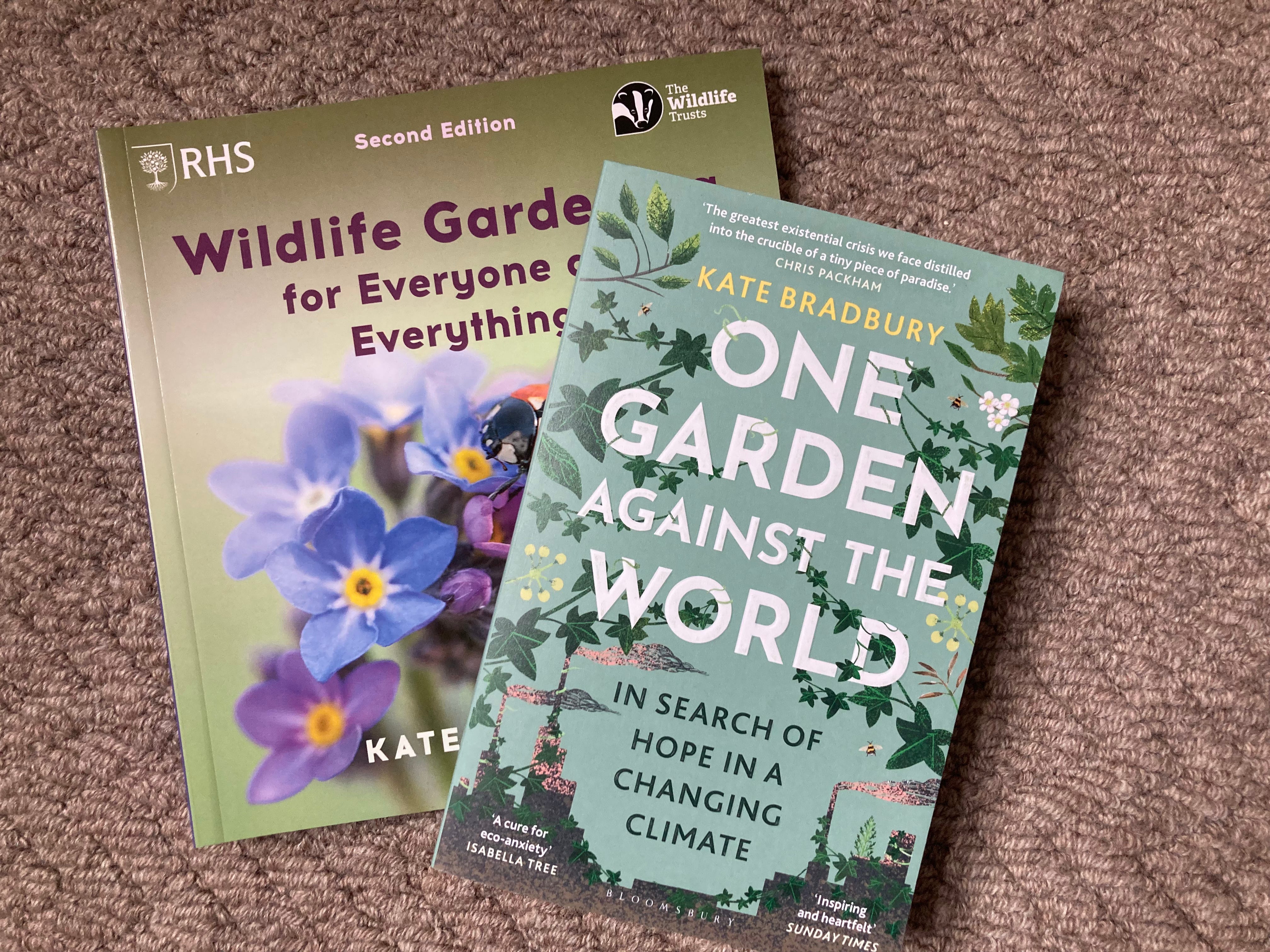
Take pity on this garden writer who would love to move house with one less box of books, and buy one off me? I still have signed copies of Wildlife Gardening for Everyone and Everything and One Garden Against the World (paperback), available to buy. Oh and one pond book.
The latest version of Wildlife Gardening for Everyone and Everything features updated information and advice on all sorts of things, including bird feeding. There’s also additional pages on climate, garden fungi and wildlife recording.
One Garden Against the World is newly available in paperback – here’s my favourite review of it, from the wonderful Cleve West.
I can sign and dedicate copies to you or someone else and post them out to you in lovely reused packaging. Buy Wildlife Gardening for Everyone and Everything/How to Create a Wildlife Pond for £23 and One Garden Against the World for £14. Both prices include postage. Or buy two for £30 including postage – that’s currently cheaper than Amazon.
OR, become an annual paid subscriber for just £40 per year and you can buy one book for a fiver plus postage. Hurrah.
Tour dates
I’m taking part in a Wild Women Writers’ salon on 24th June. This is online and I’ll be joined by JC Niala, Marian Boswell and Sarah Rigby. Pay what you feel. Tickets here.
I’ll be at RHS Sandringham Flower Show in Norfolk on Sunday 26 July, talking about my book, One Garden Against the World and how we can do more for wildlife in our gardens. I’d love to see you there. Tickets here.
I’ll be at RHS Rosemoor on 22nd August. Tickets aren’t available yet but I’m excited and I’d love to see you if you’re down that way.
I’ll be at the Beth Chatto Symposium from 28th-29th August. This will be really FUN! I’m looking forward to it. Tickets here.
I’m at Brighton’s Garden House on 2nd September for a talk on gardens as stepping stone habitats. Tickets aren’t availble yet but watch this space.
I’m at Yeo Valley Festival on 17th September. This was great last year and I’m excited to have been invited back for 2026. Tickets here.
I’m at Malvern Autumn Show on 25th September. I’m really excited about this one as I’ve not been to Malvern for years and never their autumn show. Tickets here.
If anyone wants to book me for a talk or Q&A or other event, get in touch!
Substack Live!
Thanks to everyone who joined me for my first Substack Live, which was only slightly chotic owing to the much barking of dogs and an unexpected visitor (I was house sitting for friends). Paid subscribers can catch up here.
My next one will be on gardening for hedgehogs on Thursday 25th June at 6pm, in my house, which will be very quiet. By this stage, I may even have baby hedgehogs, which will be nice, we can coo over them together (via the cameras, of course). We’ll go through how to attract hedgehogs into our gardens, natural ways to feed them plus why I think we should also be supplementing their diet, plus how to encourage them to nest (I have finally cracked this after seven years). Get your questions in now.
This is for paid subscribers only, but you can subscribe for just £3.50 per month, the absolute cheapest available option on Substack and less than the price of a coffee (don’t subscribe through Apple or Google, which will charge you £6 for exactly the same thing, and will keep the difference).
French onion soup
When we were kids, my sister and I were subjected to ‘French onion soup’ at the end of every month, as my mum, in proper Blitz spirit, told us about its rags-to-riches history as an old peasant food that suddenly became fancy. It was, as my sister frequently pointed out, just a load of onions in water, but sometimes we got croutons if there was some stale bread lurking at the back of the bread bin.
Why am I telling you this? I lost a job recently, and have been thinking of French onion soup a lot. Like many writers I had a ‘bread-and-butter’ job, a safe mortgage job that enabled me to do other stuff as and when the opportunities arose. But, like nearly everyone who works in magazines at the moment, it’s gone, thanks to AI (no-one clicks on websites anymore thanks to the AI explanation at the top of the search page, so advertising revenue has all but disappeared). I’ll be ok, the safety net of the regular job actually made me a bit lazy, and I have writing projects on the go that I’ve finally got time to do. But things are tight and will be for a while, although I’m not quite at the French onion soup stage yet. So, to all paid subscribers, thank you so so much, you really are helping me out at the moment and I appreciate you.
If you would like to become a paid subscriber, that would be super nice, but I know many of us are in the same boat so please don’t feel obliged. I am planning on doing more bits for paid subscribers over the coming months but I’m going to keep the monthly posts free for everyone – I’m a socialist, of course I am, and I love having you here. If you would like to support me but don’t want to commit to a subscription, maybe you’d like to buy me a coffee.
Keep fighting the good fight, and thanks for being here,
Kate x
I think we should all go and sit in the road after scrapes and await rescuing
Hi Kate, first comment here, but I've been reading your pieces for a few months after finding your Substack via a community biodiversity group I'm in (over here in Ireland). I feel all of what you wrote there. We're in a quiet estate in a village on the outskirts of Dublin. Many lovely little gardens, but you know the type - precise, curated, cut and restrained. And a few wild-looking ones like mine that are generally agreed by the majority to be messy and making the estate look bad. Those of us with wild gardens advocate for leaving some of the green area at the top of the estate go wild. It is a battle for every inch there. Entrenched tradition and the fear of long grass being too difficult to cut trumps any concern about starving pollinators. People don't know AND don't care, and sometimes even seem proud of their own ignorance. Bemusing. I try to engage on the local level, listen to all concerns, and all the while nag constantly about how preserving nature is so important. We might gain an inch or two. But even at that I am always on the lookout for the estate mower coming out in case the "wild area" gets conveniently forgotten about and gets shredded. God. It is draining.
And having spent the last few years trying to bring life into my back garden and digging up half the concrete of the "front yard" to make it into an actual front garden, and watching neighbours go in the exact opposite direction, I too might be faced with having to move soon. It's so hard to let go of a sanctuary where wildlife is treated as a co-habitant in a world where "human first" is the default mode of almost everyone everywhere. Yes of course, many people "care about climate change" and might even give "biodiversity loss" a polite nod, but if it jeopardises "human first" then suddenly the the reaction changes. "Well the kids have to have space to play" ... "of course, but they never use that section, and look at all the bees flitting between the wildflowers that have poked their heads up" ... "ah don't worry about the bees, sure there'll go somewhere else and the neighbours will only be complaining that it looks messy". And so after a wonderfully peaceful five weeks of "No Mow May" suddenly dozens and dozens of bees lost nine-tenths of their food source in our estate, because the green area must look tidy and gardens must be paved for convenience.
Sorry, just moaning about my own situation. :-) But I wonder how many times the same conversation is being had all around the world, the same struggle for nature first, the same obliviousness of the ecological debt that humans owe. Anyway I just want to say that I feel all the same aspects of the grief and loss that you feel. You did what you could and change is inevitable. I hope you find peace again in your new home.